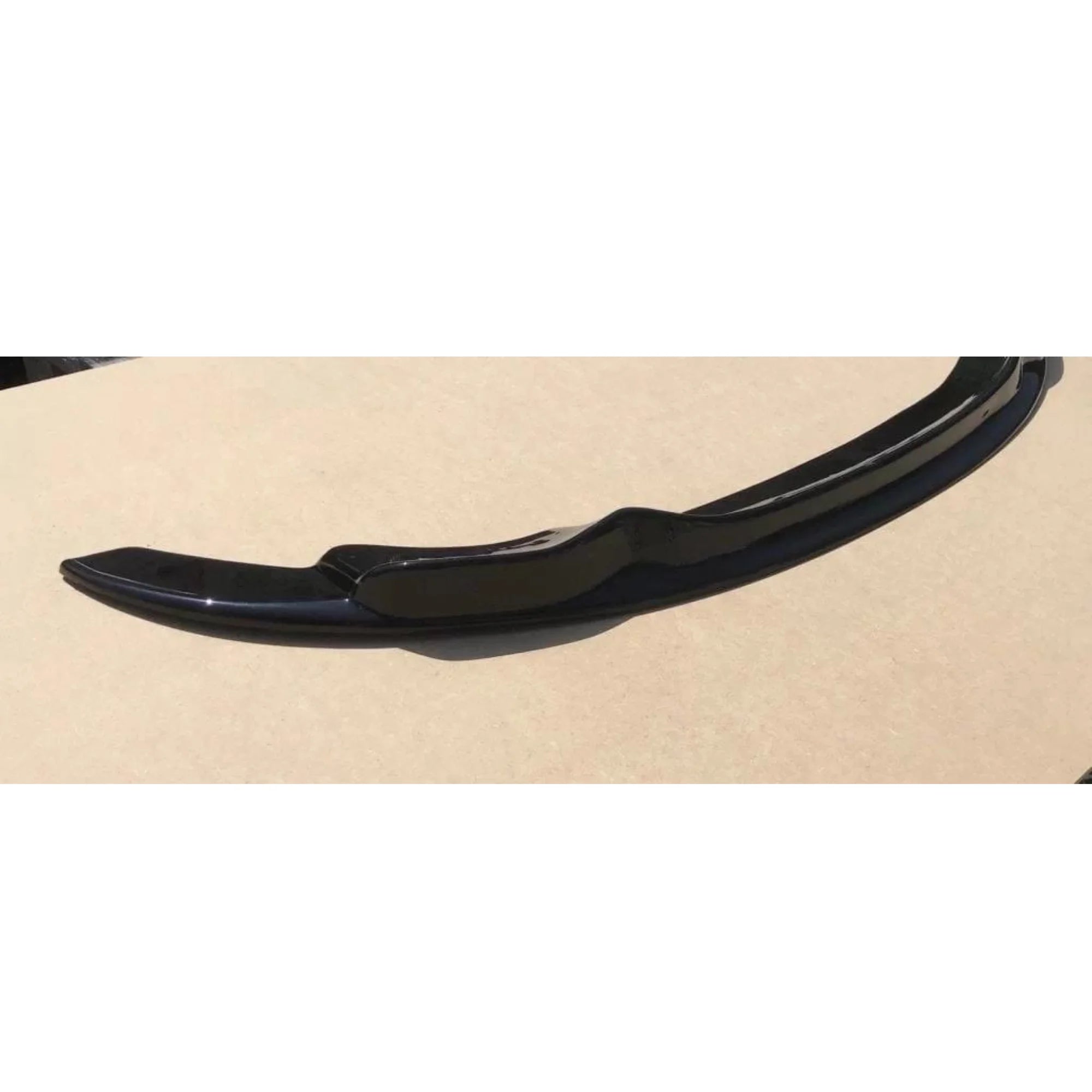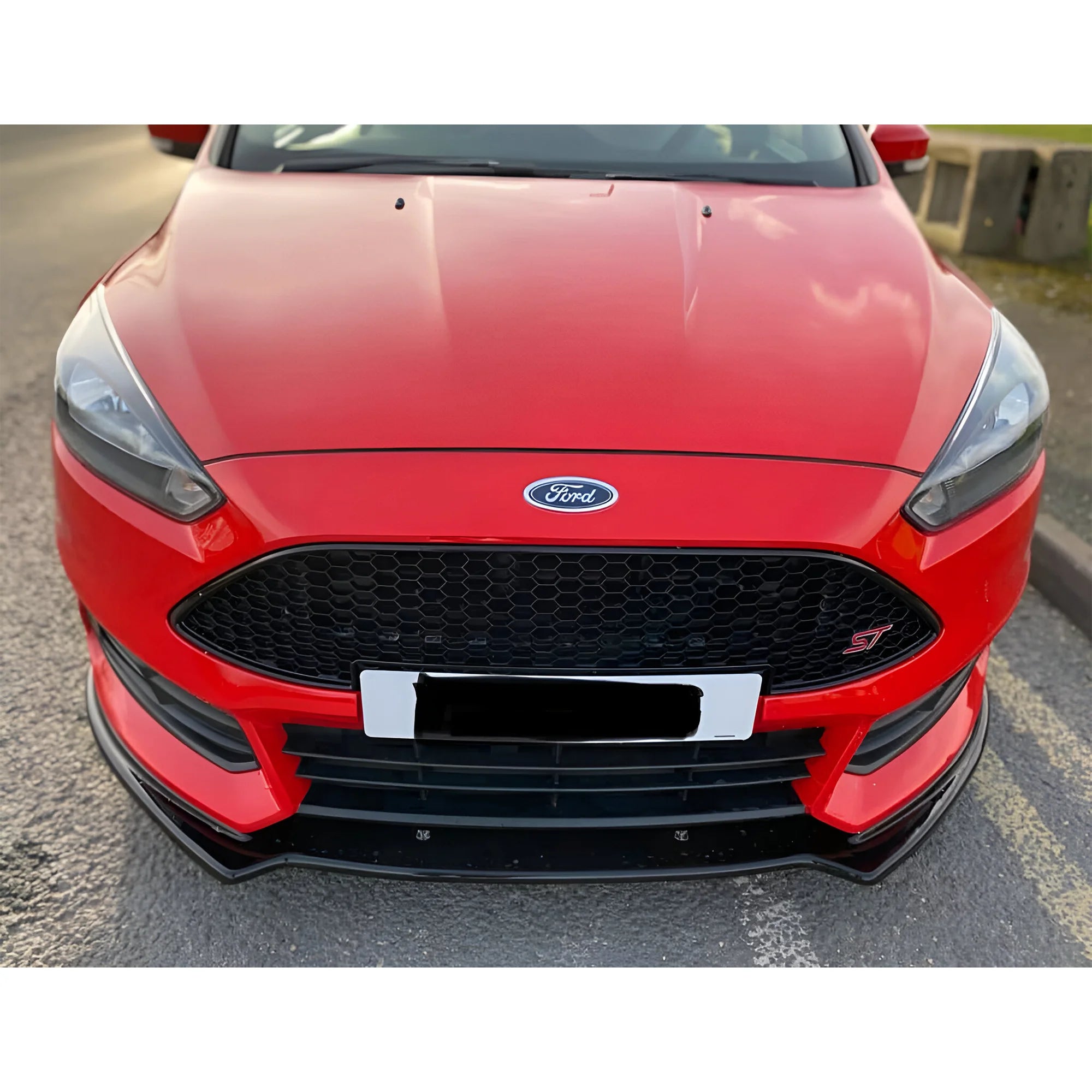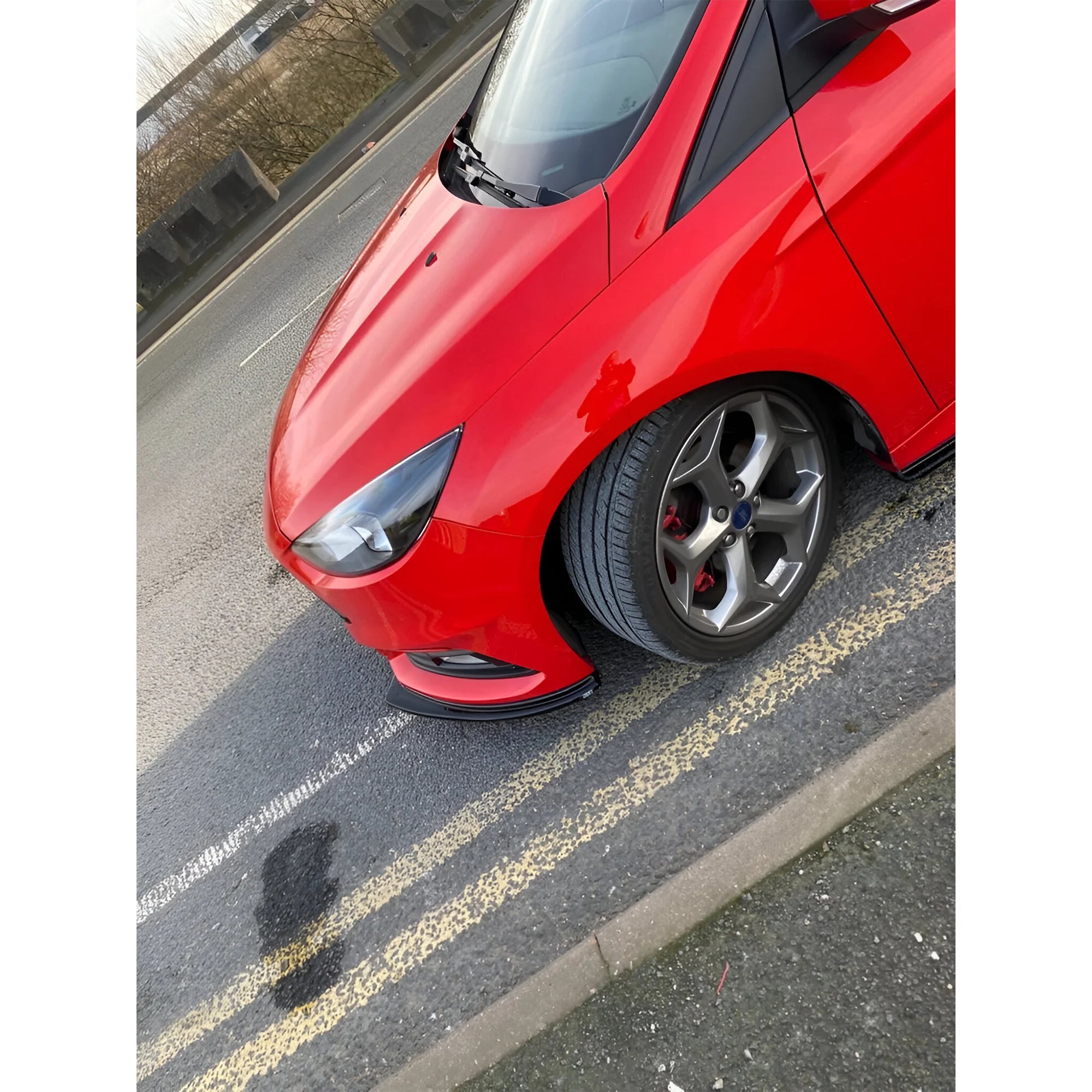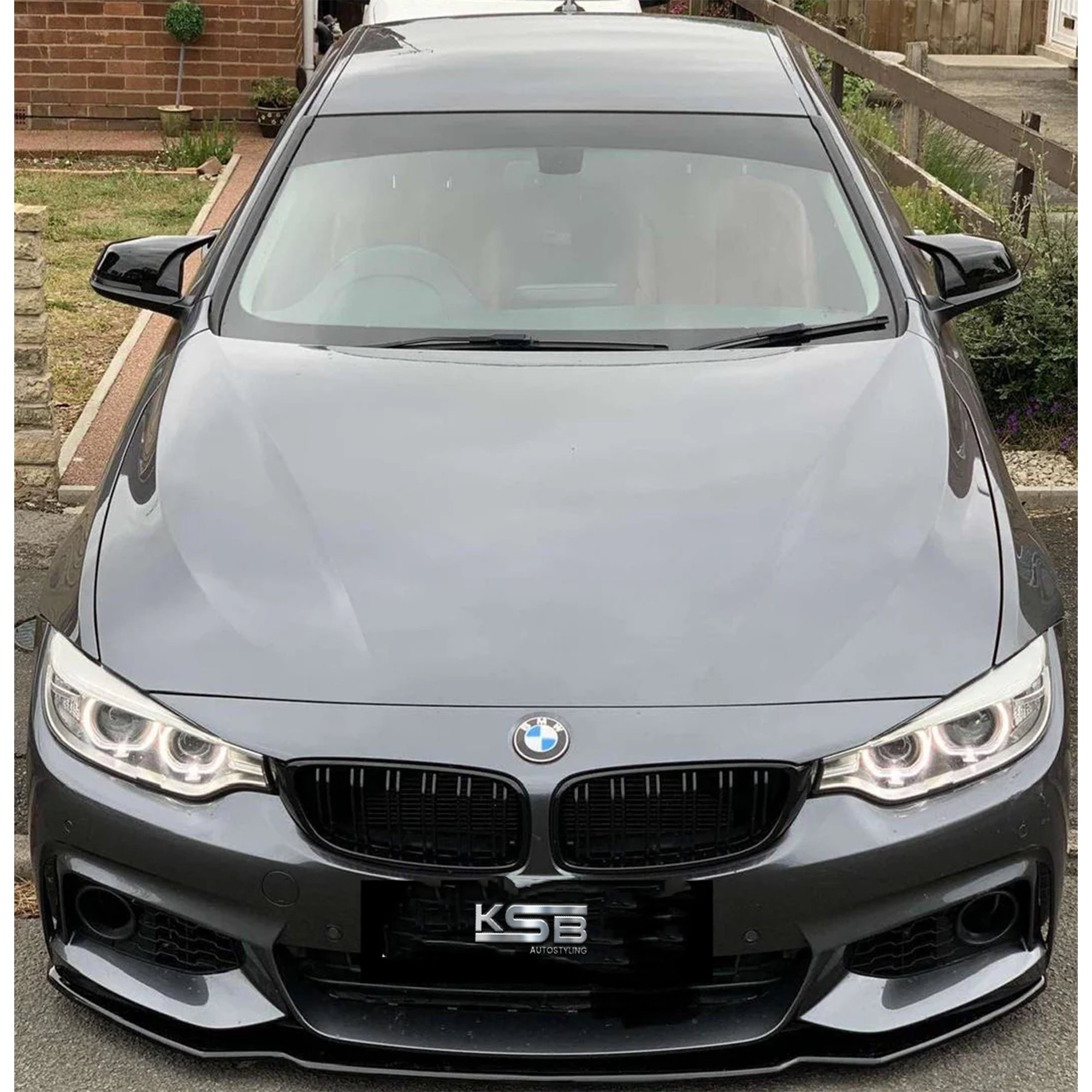

Best BMW F20/F21 1 Series Exterior Styling Mods
The best BMW F20/F21 exterior styling mods depend on the look you want and how you use the car. A front splitter makes the lower bumper more prominent, side skirt extensions connect the front and rear, and a compatible diffuser or rear splitters finish the lower body. A roof spoiler changes the rear profile without reducing ground clearance.
For a daily driver, start with one part that suits your existing bodywork and driving conditions. For a complete build, choose the front, side and rear components together so their depth and finish work consistently around the car.
This guide focuses on exterior styling parts, comparing their visual effect, practical drawbacks and fitment requirements. Before ordering, identify your car’s body style, facelift status, bumper and exhaust layout.
Which BMW F20/F21 Styling Mod Should You Start With?

|
Styling mod |
Best suited to |
Main consideration before buying |
|
Front splitter |
A more pronounced lower front bumper |
Bumper compatibility and clearance on driveways or speed bumps |
|
Side skirt extensions |
Connecting the front and rear styling |
Confirmed sill fitment and access to jacking points |
|
Rear diffuser |
Changing the lower rear bumper around the exhaust |
Bumper shape and the number and position of exhaust outlets |
|
Roof spoiler |
Changing the rear profile while retaining ground clearance |
Hatch compatibility and the specified mounting method |
|
Rear splitters |
Finishing the outer corners of the rear bumper |
Compatibility with the bumper and any existing diffuser |
|
Complete body kit |
Planning the front, side and rear together |
Exact kit contents and compatibility of every included part |
Check Which BMW F20 or F21 You Own
F20 and F21 are BMW’s chassis codes for the second-generation 1 Series hatchback:
- F20: five-door hatchback, introduced in 2011.
- F21: three-door hatchback, introduced in 2012.

Both belong to the generation that ran until 2019. BMW introduced the three-door version a year after the five-door, so the two body styles do not have identical starting dates.
Some styling parts are listed for both F20 and F21 models. Others have narrower applications. Use the supplier’s confirmed fitment information for the individual part rather than assuming compatibility from the generation or number of doors.
Pre-LCI or LCI?
LCI means “Life Cycle Impulse”, BMW’s name for a mid-generation facelift.
As a general guide, the model years are:
- Pre-LCI: 2011 to 2015
- LCI or facelift: 2015 to 2019

The facelift changed the headlights, rear lights, bumpers and several smaller exterior details. Those changes affect the shape and mounting position of splitters, diffusers and other bumper-mounted parts.
Registration year alone is not always conclusive. Cars registered around the 2015 changeover can cause confusion, and a previous owner may have fi ted a replacement bumper. Compare the bumper with the product photographs before ordering.
M Sport or Standard Bumper?
Many F20 and F21 styling products are made specifically for the M Sport bodywork. “M Sport” is not simply a description of the part’s appearance. It tells you which bumper the part follows.
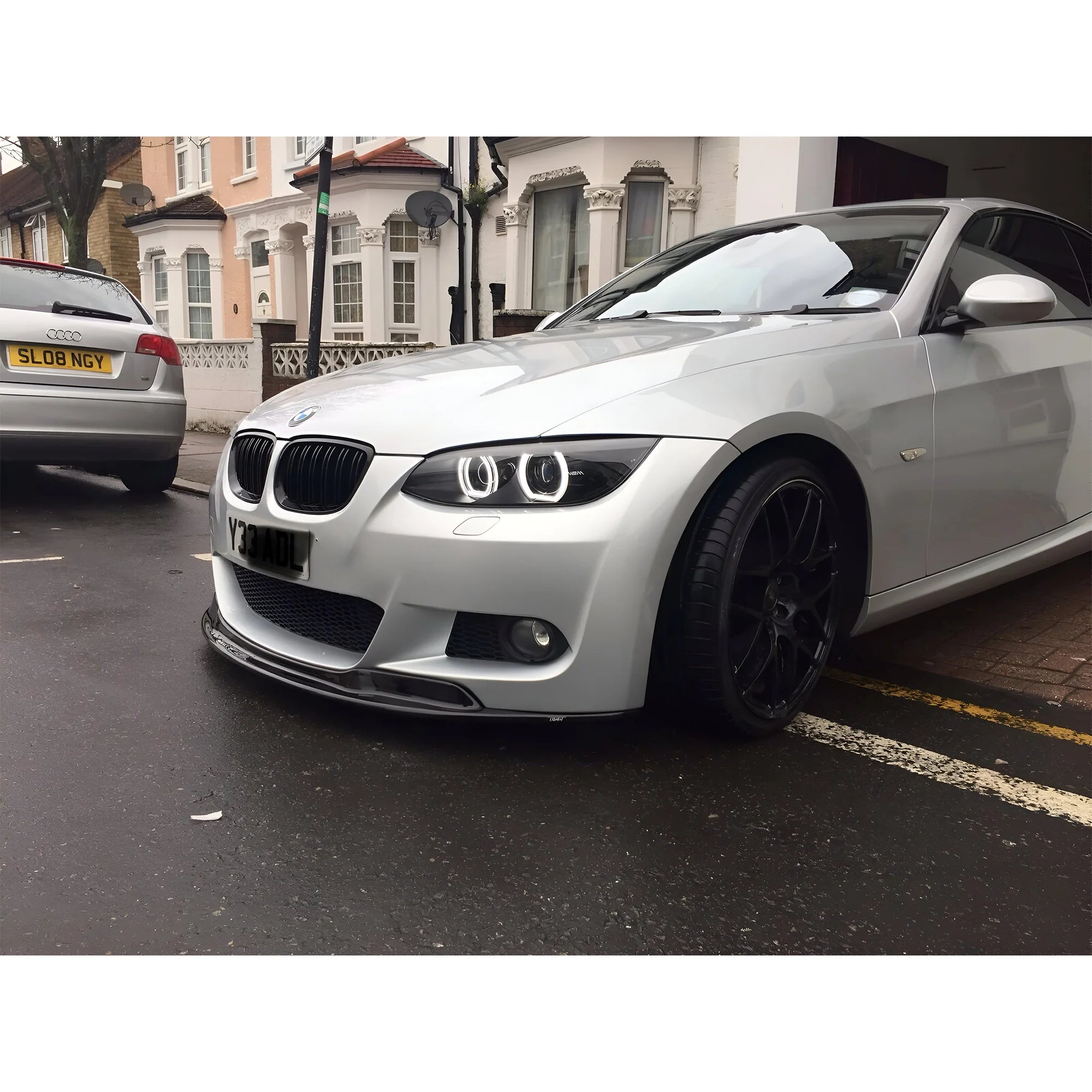
An M Sport splitter will not usually fit an SE, Sport or other standard bumper correctly. Non-M Sport owners still have options, including the BMW F20/F21 2011–2015 non-M Sport splitter, but the listing must explicitly match the bumper on the car.
Check the Exhaust Before Choosing a Diffuser
Rear diffuser fitment depends on the bumper and the actual exhaust outlet arrangement. Count the visible tips and check where they sit: grouped on one side or positioned on both sides of the bumper. Descriptions such as “single-exit” and “twin-exit” can be ambiguous without photographs, so compare the diffuser openings with your car. An engine badge alone is not enough to confirm compatibility, particularly if the exhaust has been modified.
Before buying any F20 or F21 styling part, confirm:
- F20 or F21 body style
- Pre-LCI or LCI
- M Sport or standard bumper
- Engine variant
- Number and position of the exhaust outlets
- Any aftermarket bumper or exhaust already fitted
Taking a few clear photographs of the front bumper, rear bumper and exhaust can make it much easier to confirm the correct part.
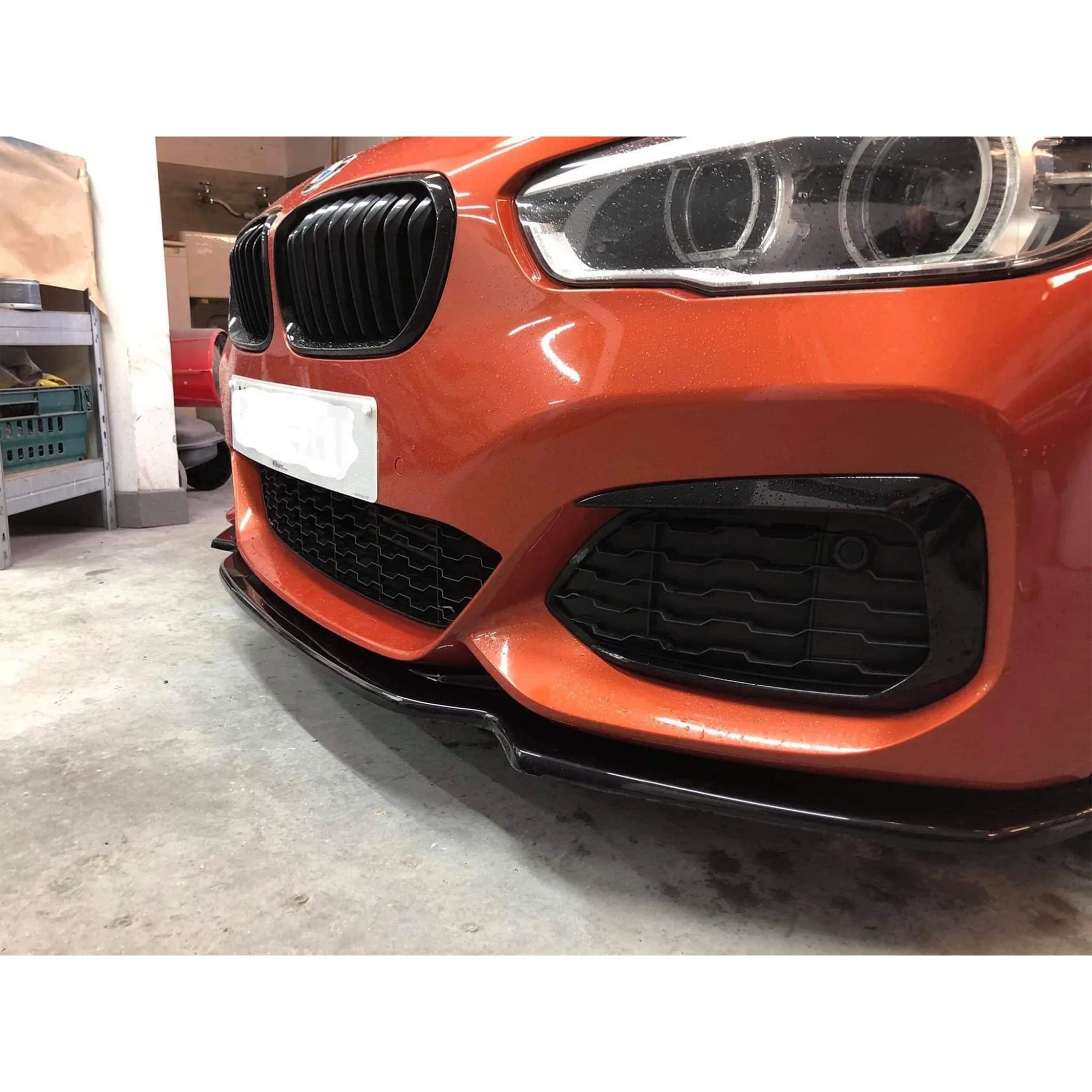
1. Front Splitter: The Best First Mod for Most F20/F21 Owners
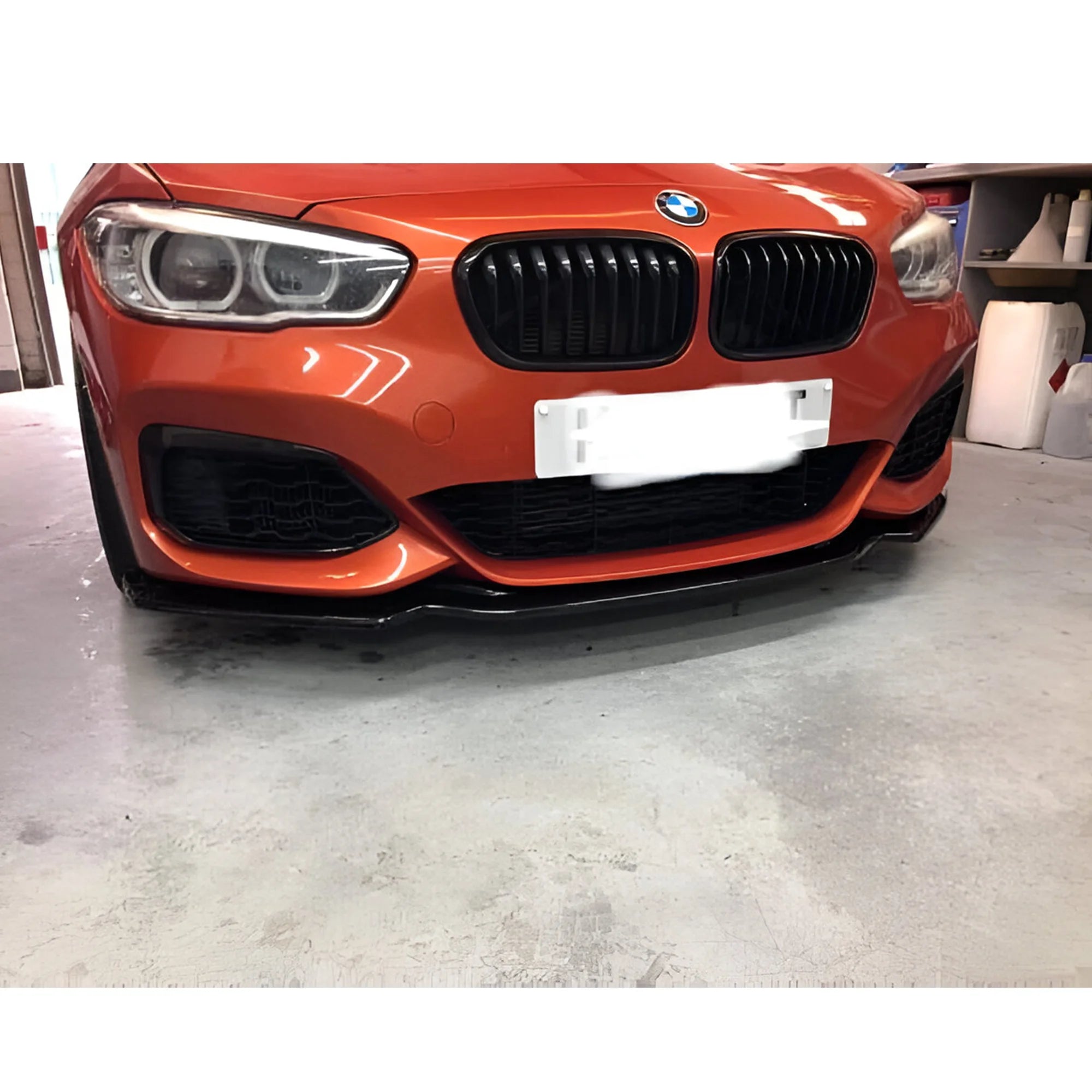
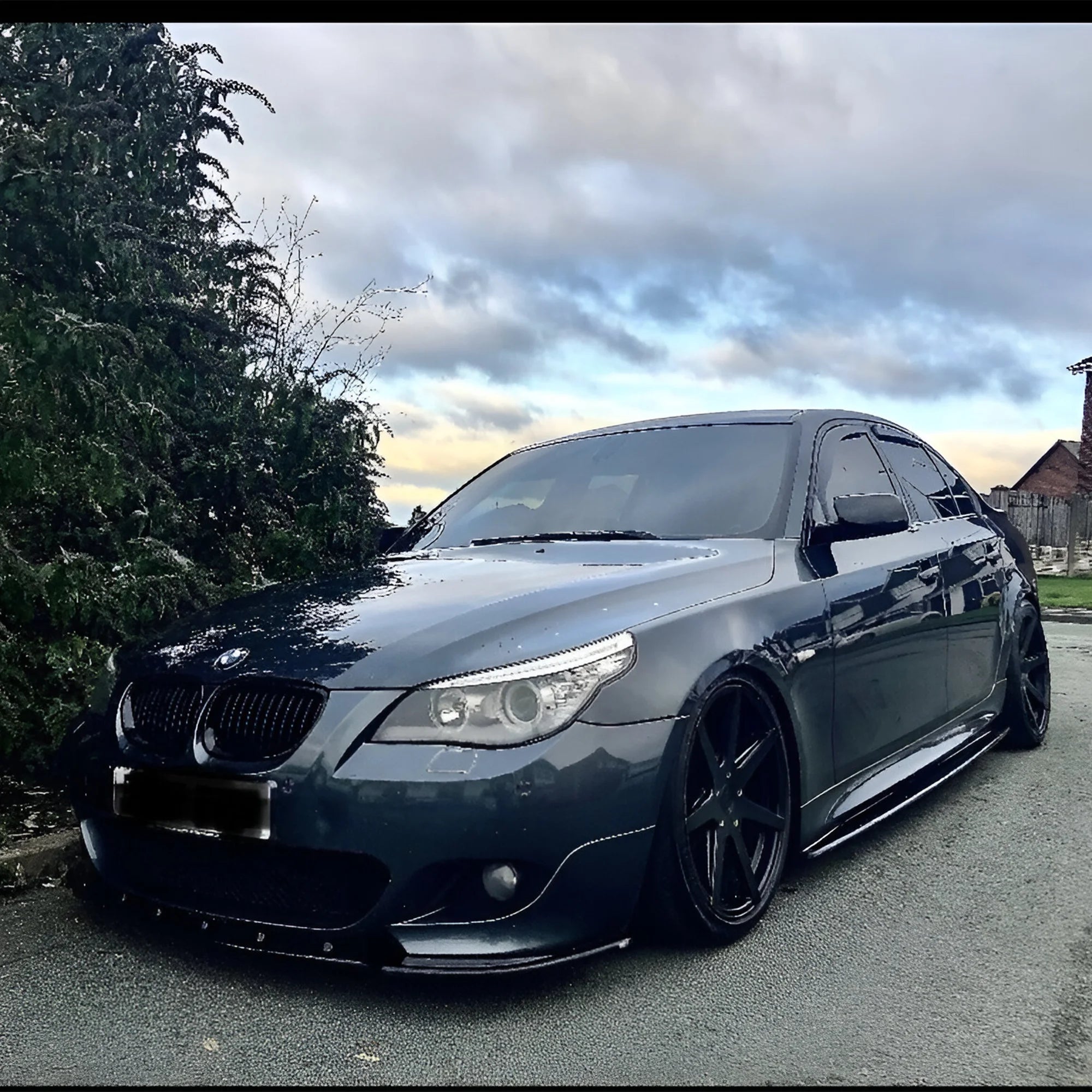
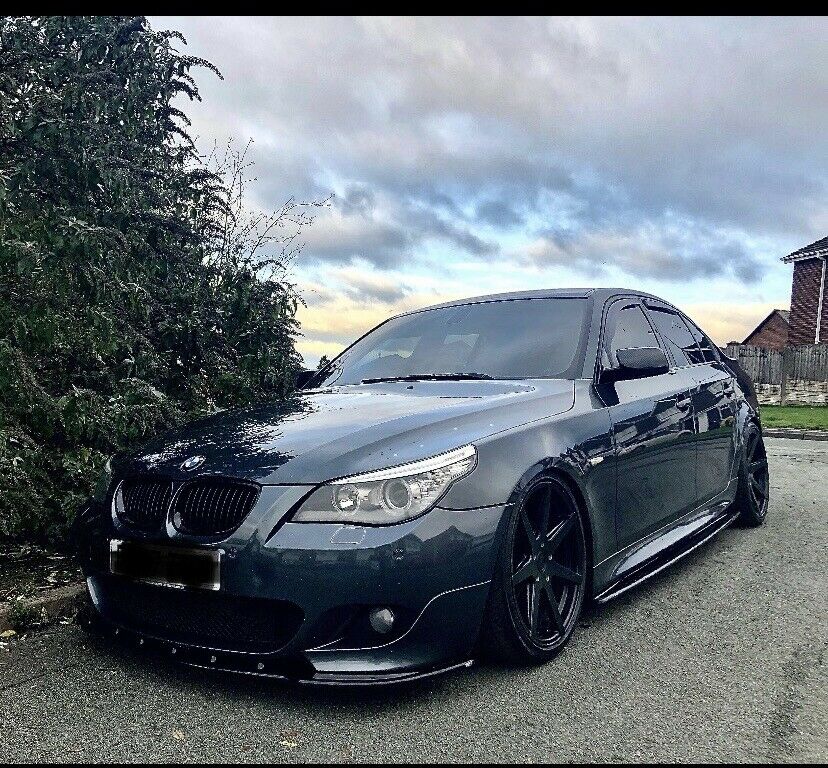
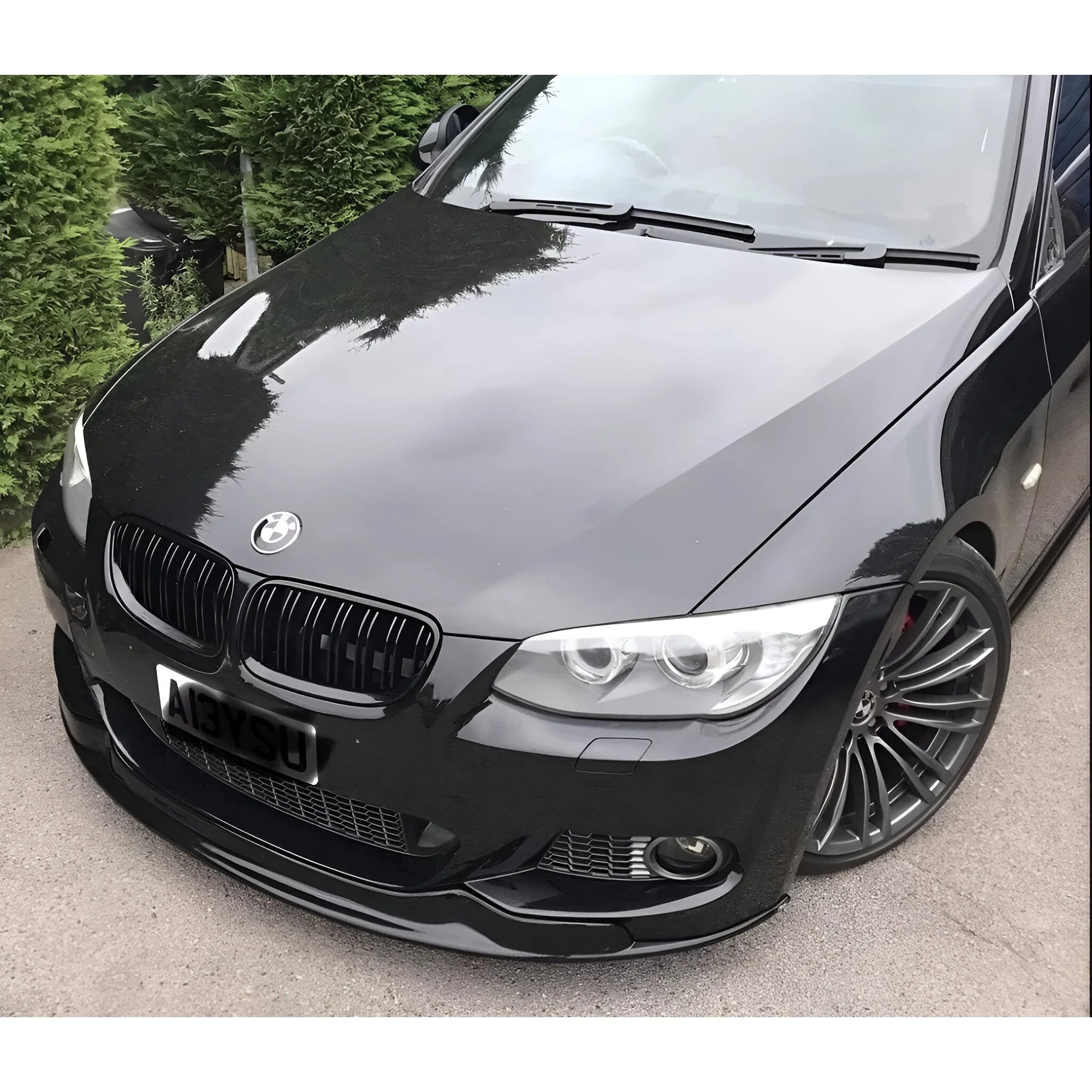
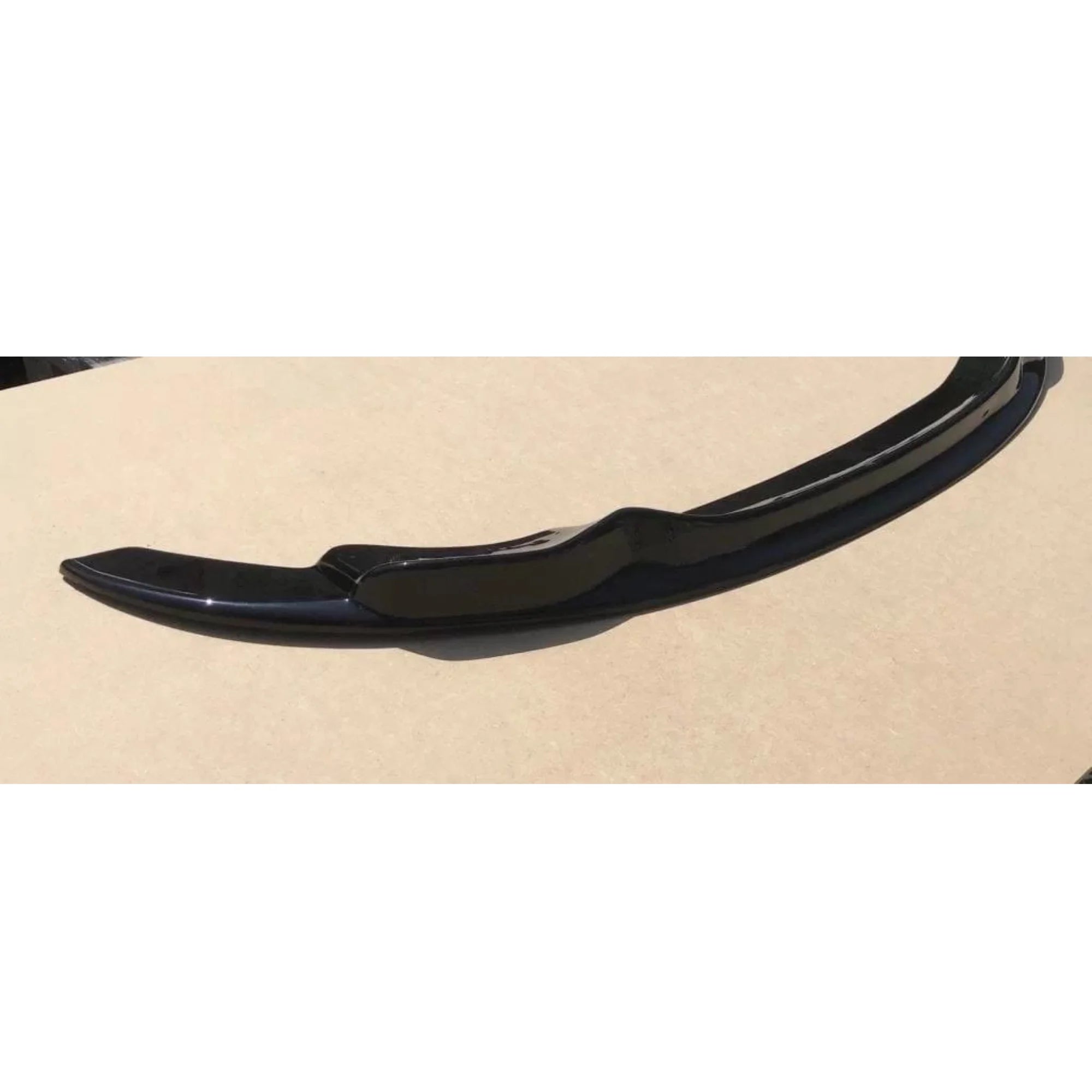
A front splitter is a good first choice if your priority is a more defined lower front bumper. It extends the bumper’s visible edge and can make the car appear closer to the road without changing the suspension.
The recommendation is about visual impact rather than a measured performance benefit. On a daily-driven car, weigh that change against the extra care needed around kerbs, steep entrances and speed bumps. If front clearance is already tight, consider a roof spoiler first.
Fitment still comes first. KSB Autostyling stocks separate products for the facelift F20/F21 M Sport front bumper and the pre-facelift M Sport bumper. They may look similar in isolation, but they follow different bumper shapes.
Will a Splitter Cause Problems on UK Roads?
A splitter adds material beneath and in front of the bumper, so there is less clearance over steep driveways, raised car park entrances and speed bumps. The problem becomes more noticeable if the car has already been lowered.
That does not rule out a splitter on a daily-driven BMW. It simply calls for a realistic choice. A very deep design may look good in a photograph but become irritating if the car regularly enters a steep driveway.
Leave extra space when parking towards kerbs and approach changes in road level carefully. If ground clearance is a major concern, a roof spoiler may be a more practical first modification.
2. Side Skirts and Extensions: Connect the Front and Rear
Once a front splitter is fitted, the side profile can start to look comparatively high. Side skirt extensions carry the lower line from the front wheel towards the rear, making the body appear longer and closer to the road.
They do not physically lower the car. The effect comes from changing the visible depth of the sill area.
“Side skirt” and “side extension” are sometimes used as though they mean the same thing, but that is not always accurate. A replacement side skirt takes the place of the factory panel. An extension normally attaches to the existing sill or skirt. Read the product description and fitting information before removing anything from the car.
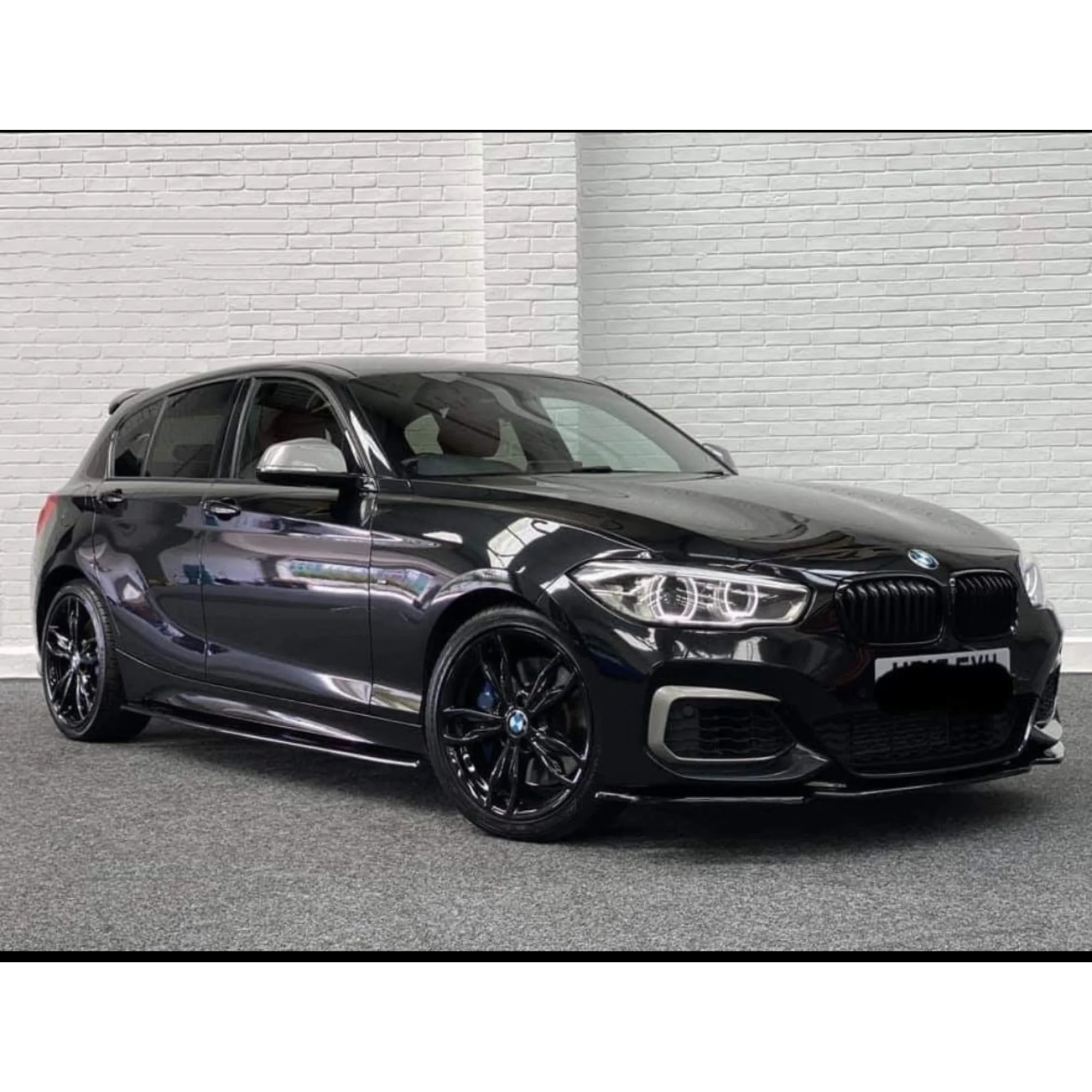
Owners building the car in stages can consider the BMW F20/F21 side skirts for 2011–2019 models. There is also a combined facelift M Sport splitter and side extension package for a more coordinated front and side setup.
During installation, check that the extensions do not cover the jacking points or interfere with the doors. Stand back and inspect the car from both sides before tightening every fixing. Even a slight rise or drop along the sill tends to show once the car is back on the ground.
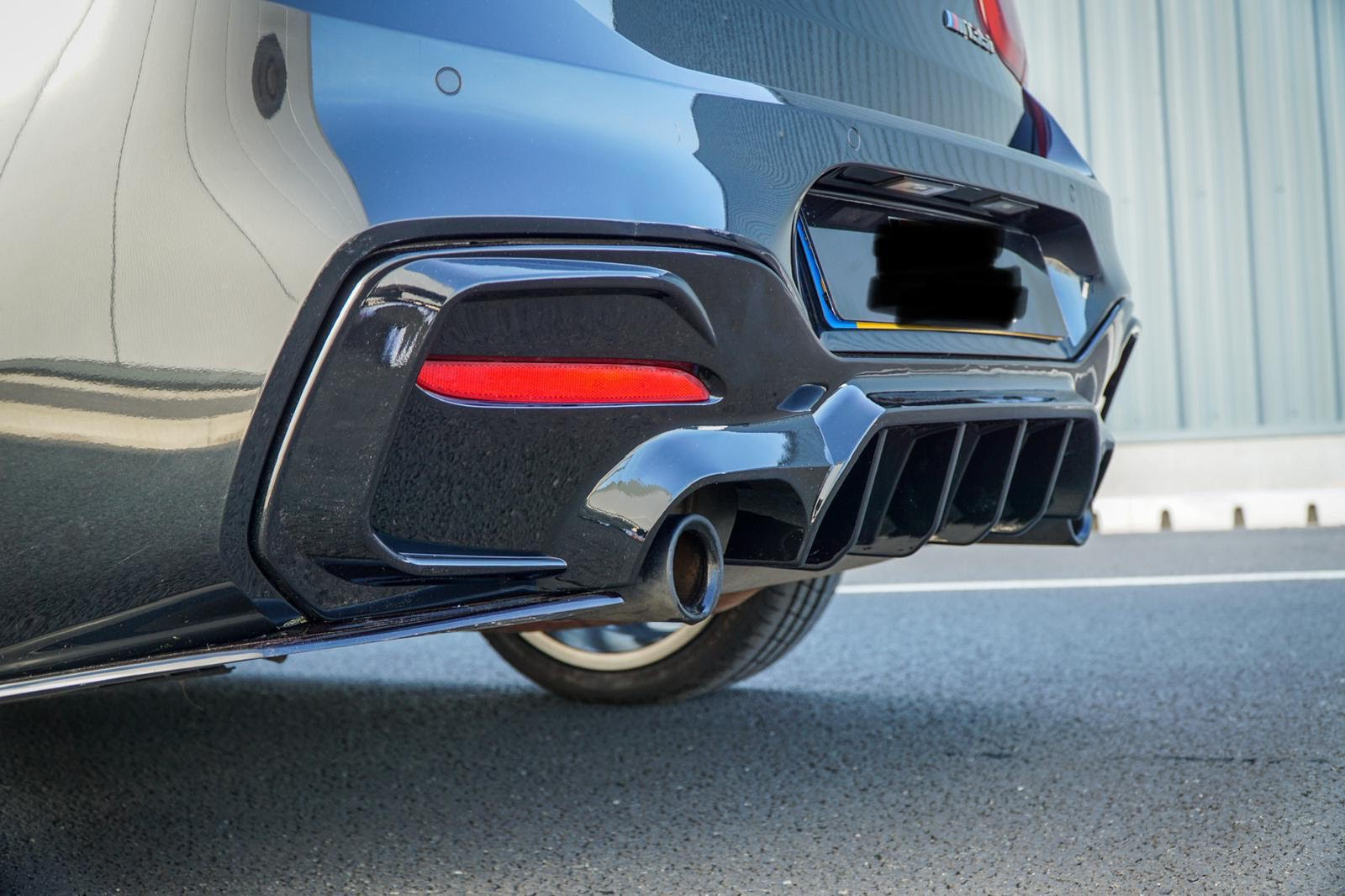
3. Rear Diffuser: Choose It Around the Exhaust
A rear diffuser gives the lower bumper more shape and creates a defined surround for the exhaust. It also helps balance the stronger front and side profile created by a splitter and side extensions.
Although these parts are called diffusers, most road-car versions are bought primarily for styling. It is better to treat them as exterior trim unless the manufacturer provides credible aerodynamic test data.
The correct opening is just as important as the bumper shape. KSB carries several model-specific options, including:
- LCI rear diffuser for 120/125 single-exhaust models
- Pre-LCI M Sport rear diffuser for the 125i and 125d
- Pre-LCI M Sport M135i rear diffuser
A diffuser should frame the exhaust cleanly, with sensible and even clearance around the tips. Do not buy one based on a rough visual resemblance. Match the model, bumper, engine and outlet arrangement stated in the listing.
Gloss black is an easy finish to coordinate with black kidney grilles, window trim and a matching splitter. If a product has a carbon-look surface, describe and treat it as carbon-look unless it is confirmed as genuine carbon fibre.
4. Roof Spoiler: A Cleaner Way to Change the Rear Profile
A roof spoiler extends the upper edge of the hatch and makes the back of the F20 or F21 look less upright. It creates a visible change without reducing ground clearance or altering the lower bumper.
That makes it a useful standalone mod for owners who prefer a restrained OEM-plus look. It also works as a finishing touch once the lower body has been styled.
The BMW F20/F21 M Performance-style roof spoiler covers the 2011–2019 generation, subject to the fitment details on the listing.
Spoiler installation tends to look simple, but poor preparation can cause movement or lifting later. The mounting surface needs to be clean, dry and free from wax, polish or ceramic coating residue. Position the spoiler carefully before the adhesive begins to grip, then allow the full curing time recommended for the fitting material.
If drilling is required, or the spoiler does not sit evenly during a test fit, use an experienced installer.
5. Rear Splitters: Finish the Lower Corners
Rear splitters sit towards the outer edges of the lower bumper. Their job is largely visual: they extend the line created by the side skirts and make the rear appear wider.
They are not a replacement for a central diffuser. The diffuser shapes the area around the exhaust, while rear splitters define the bumper corners. Some setups can use both, provided the components fit together and do not share conflicting mounting positions.
The BMW F20 M Sport LCI rear splitters are intended for the facelift M Sport application. Pre-LCI and standard-bumper owners will need to check for a suitable alternative.
Rear splitters tend to make more sense once the front and sides have been addressed. Fitted on their own, they can look like isolated add-ons rather than part of a complete design.
6. Complete Body Kit: Best for a Coordinated Build
A body kit suits owners who already know they want to restyle the front, sides and rear. Buying the main components together makes it easier to keep their depth, finish and overall shape consistent.
KSB Autostyling offers separate kits for the pre-facelift F20/F21 M Sport and the facelift F20/F21 M Sport.
Check what the chosen kit contains before ordering. “Body kit” can refer to different combinations of parts, so never assume a spoiler, diffuser or set of rear splitters is included unless it appears in the product description.
|
Consideration |
Complete body kit |
Individual parts |
|
Overall appearance |
Easier to coordinate |
More freedom to personalise |
|
Cost |
Larger initial purchase |
Cost can be spread over time |
|
Installation |
Main parts can be aligned together |
Work can be completed in stages |
|
Flexibility |
Limited to the kit’s style |
Easier to mix selected components |
|
Best suited to |
A planned full transformation |
A gradual or more restrained build |
A complete kit does not remove the need for fitment checks. It still has to match the facelift status, bumper type and exhaust layout of the car.
Smaller Styling Mods That Work With the Main Build
Kidney grilles, mirror covers, wheels and exhaust tips can finish the car nicely, but they should support the larger styling choices rather than compete with them.
A simple finish usually works best. Body colour with gloss black accents is a reliable combination, particularly if the splitter, side extensions and rear diffuser all use the same black finish. Genuine carbon-fibre details can also work, though adding one isolated carbon-look component to an otherwise gloss-black build may feel disconnected.
Wheel choice affects the car’s stance more than most trim pieces. Fitment needs to account for wheel width, diameter, offset, tyre size, load rating and suspension clearance. The tyre must not rub against the bodywork or protrude dangerously beyond it.
Take similar care with window tints and lighting. Very dark front-window tints, unsuitable bulbs and heavily tinted lamps can create visibility, road-use and MOT problems. Styling should not come at the expense of being able to see or be seen.
Best BMW F20/F21 Styling Setup by Budget
Recommended BMW F20/F21 Styling Combinations
For a Subtle Daily Driver
Choose one main addition: a shallow front splitter if clearance allows, or a roof spoiler if you want to retain the existing lower-body clearance. Match its finish to the car’s existing trim before adding further accessories.
For a Balanced Front, Side and Rear Update
Combine a model-specific front splitter with matching side skirt extensions, then choose either a compatible diffuser or rear splitters according to the rear bumper and exhaust layout. Compare photographs of the parts fitted to cars, paying attention to how far each component projects.
For a Complete Exterior Build
Start with a compatible body kit and check its contents before ordering anything separately. Add a roof spoiler only if it suits the overall design and is not already included. Leave smaller details, such as grilles and mirror covers, until the main components have been chosen.
Before committing, calculate the total cost of the parts, delivery, fitting materials, installation and any painting required. Compare a kit with the same components bought individually; do not assume the package is cheaper without checking.
Gloss Black, Carbon-Look or Colour-Coded?
Gloss black is popular because it creates a clean contrast on lighter paint colours and coordinates with common BMW trim. On a black car, the change is more understated, relying on shape and reflection rather than strong colour contrast.
Carbon-look parts imitate the appearance of carbon fibre but do not necessarily share its construction, weight or properties. Check the material description before buying.
Finish and construction material are separate details. “Gloss black” describes the surface appearance, while “carbon-look” describes a visual effect; neither tells you what the part is made from. Check the stated material, whether the part arrives ready to fit or needs painting, and which fixings or mounting materials are included. If the listing does not provide those details, ask before ordering.
Colour coding can make a styling part feel more integrated with the body. Good preparation and accurate paint matching are essential, especially on older cars whose paint may have changed slightly through age and exposure.
Whichever route you take, repeat it with purpose. A gloss-black front splitter, carbon-look skirts and colour-coded rear diffuser may all look appealing separately, but together they can make the build feel unresolved.
DIY Fitting or Professional Installation?
Some bolt-on styling parts can be installed at home by an experienced owner with the correct tools and fitting materials. Always carry out a full test fit before drilling, applying adhesive or removing protective film.
Professional fitting is worth considering if:
- Drilling may be required
- Several parts need to be aligned together
- The product needs adjustment
- Existing panels or mounting points are damaged
- The car has a non-standard bumper or exhaust
- You are unsure which fixings or adhesive to use
Household double-sided tape is not a substitute for suitable automotive mounting material. Surfaces must be properly cleaned, and all mechanical fixings should be secure without being overtightened.
If the part does not sit correctly during the test fit, stop there. Forcing it into position rarely leads to a good long-term result.
Are BMW F20/F21 Styling Mods Legal in the UK?
Most cosmetic styling modifications are legal in the UK if they are securely fitted, roadworthy and do not create dangerous projections. They must not cover the registration plate, obstruct the lights or cause unsafe wheel and tyre clearance.
Tell your insurer about any change from the vehicle’s original specification. Body kits, spoilers, non-standard wheels and other cosmetic additions can affect the insurer’s assessment of the vehicle. Failing to declare them may put the policy or a later claim at risk.
Cars held through PCP or hire purchase need another check. Read the finance agreement before making permanent changes, as permission from the finance provider may be required.
Legal and insurance requirements can depend on the modification and the individual vehicle. If anything is uncertain, check with the insurer, finance provider or an MOT professional before the work begins.
Final Checks Before Ordering Your Styling Parts
Once you have identified a compatible part, check what the purchase includes. Confirm whether fixings or adhesive are supplied, whether painting is required, and whether the fitting instructions call for drilling or other permanent changes. Read the returns policy before starting installation.
Browse the BMW styling collection to compare available parts, and use the customer gallery to assess how different combinations look on complete cars. Reference photographs are most useful when the car has the same bumper and facelift status as yours.
If compatibility remains unclear, contact KSB Autostyling with the product link, body style, registration year, bumper details and clear front and rear photographs. Mention any replacement bumper or aftermarket exhaust, and request fitment confirmation before placing the order.
Which Styling Mods Should You Choose?
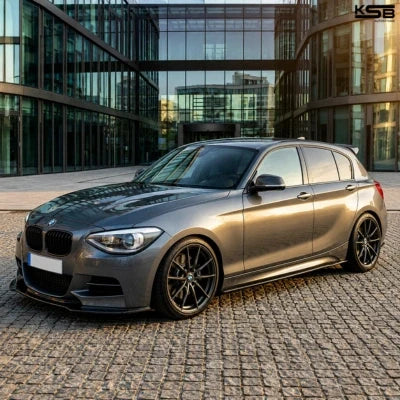
Choose the part that addresses the area you most want to change. A splitter emphasises the front bumper, a roof spoiler changes the upper rear profile, and a coordinated front, side and rear combination suits a more complete transformation.
Before buying, resolve any uncertainty about fitment and account for installation costs. A smaller selection of compatible, well-fitted parts is often enough to achieve the look you want.
FAQs
What are the best styling mods for a BMW F20?
The best BMW F20 styling mods are a front splitter, side skirt extensions, rear diffuser, roof spoiler and rear splitters. Start with a splitter for the most noticeable single change, then add matching side and rear components to keep the car visually balanced.
What is the difference between the BMW F20 and F21?
The BMW F20 is the five-door second-generation 1 Series hatchback, introduced in 2011. The F21 is the three-door version, introduced in 2012. Some exterior styling parts fit both, but compatibility must be confirmed for the specific product, bumper and facelift status.
How can I tell if my BMW F20 is LCI or pre-LCI?
Pre-LCI BMW F20 models generally date from 2011 to 2015. LCI or facelift cars generally date from 2015 to 2019 and have revised lights and bumpers. Check the physical bumper and light design as well as the registration year, especially on cars registered around the 2015 changeover.
Do F20 styling parts fit the BMW F21?
Some do. Check that the product explicitly lists both F20 and F21, then confirm any restrictions involving facelift status, bumper type or exhaust layout. A shared generation does not guarantee that every styling part is interchangeable.
Will an M Sport splitter fit a standard BMW F20 bumper?
An M Sport splitter will not usually fit a standard F20 bumper because the lower bumper shapes and mounting areas differ. Owners of SE, Sport and other non-M Sport models need a splitter specifically made for their bumper.
How do I choose the correct rear diffuser for my F20 or F21?
Match the diffuser to the car’s facelift status, bumper type, engine and exhaust arrangement. Check the number and position of the exhaust outlets and account for any aftermarket exhaust already fitted. The product listing should confirm the compatible models and years.
Do cosmetic BMW modifications affect UK car insurance?
They can. Body kits, spoilers, alloy wheels and other cosmetic changes should be declared to the insurer. Even a modification that does not alter performance may affect the vehicle’s value or the insurer’s risk assessment.
Can I install an F20 body kit myself?
A capable owner may be able to fit straightforward bolt-on parts at home. Professional fitting is safer if drilling, permanent adhesive, adjustment or complex alignment is involved. Test-fit every component before making any irreversible changes.
What should I check when budgeting for BMW F20/F21 styling mods?
Include the parts, delivery, fitting materials, installation and any painting required. Check whether fixings are supplied and exactly which components a body kit contains. Compare complete purchase and fitting costs rather than the advertised part price alone.